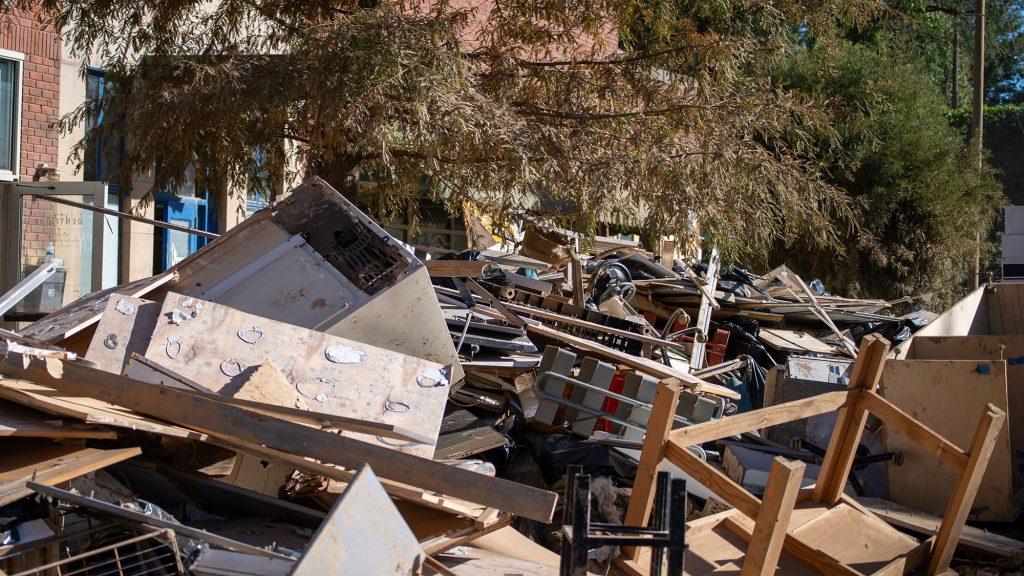
After last month’s clean up from historic central Indiana flooding, we find ourselves reflecting on lessons learned from managing storm debris around our businesses and homes.
We may be faced with general piles of debris, but if we break it down and start to separate the waste into categories (like we might do for recycling), waste disposal will be streamlined and move quicker. The Indiana Department of Environmental Management (IDEM), offers 3 categories (plus general solid waste) to think about when cleaning up from storms. All categories have the potential to contribute to groundwater contamination and human health issues, so knowing how and where to dispose of them is critical.
1. Vegetative Debris
This category includes things such as trees, brush, and other natural materials. After storms, it is important to clean storm drains of this debris to keep water moving to the appropriate collection areas. Vegetative waste is the only debris material that can be burned (in accordance with local ordinances).
2. Household Hazardous Waste
Preparation is the key to preventing accidental spills in this category that includes products such as household chemicals, pesticides, lawn care, and automotive fluids. Severe weather events can create conditions that increase the likelihood of these chemicals being spilled or transported away from their proper storage. Chemical containers should be sealed tightly, stored upright, and ideally kept in a lockable, waterproof storage bin or cabinet. Anchoring shelves provides an additional level of security against tipping. Avoid storing chemical containers in the basement, crawl space or on the floor of your garage or shed, as these lower areas are more likely to be affected by floodwaters. When storing, keep in mind to segregate chemicals to prevent dangerous reactions in case of minor spills or leaks.
If you have household hazardous waste that is damaged during a flood, take them to proper disposal locations such as the Indianapolis ToxDrop, operating on several Saturdays a month. Residents are also able to dispose of electronics at these events.
3. Building materials
Sometimes building materials in a flood such as soaked drywall simply can’t be disinfected or dried. If you are unable to find a recycling location or special flood collection program, check with a facility that handles general construction debris. Reminder – do not burn building material debris. In some cases, disasters may stir up hazardous substances such as asbestos containing materials which should not be burned.
Regardless of what you are cleaning, always take proper safety precautions such as gloves, footwear, and safety glasses. If you are unsure if a structure of area is safe to enter, do not enter. In the event of a chemical spill, it is important to handle clean-up with caution. Avoid touching spilled chemicals with bare hands or inhaling fumes. Keep children and pets away from areas where chemicals are stored or where a spill has occurred. Contact local authorities and follow their guidance, particularly if the spill is large or if the substance is unknown or toxic. Rely on personnel specifically trained in hazardous waste management and disposal to ensure the situation is responded to safely.
- Call 911 or the National Poison Control Center at 1-800-222-1222 if you suspect someone has been poisoned by a chemical.
- Call local authorities or the National Response Center at 1-800-424-8802 to report oil and chemical spills, abandoned containers, or other containers you suspect may contain chemicals.
Taking the time to sort and dispose of each of the categories not only protects you and your business, but it also protects disaster relief workers and those down stream who are involved in sorting the material. Let’s continue working together to keep our communities above ground safe and our water below ground clean!