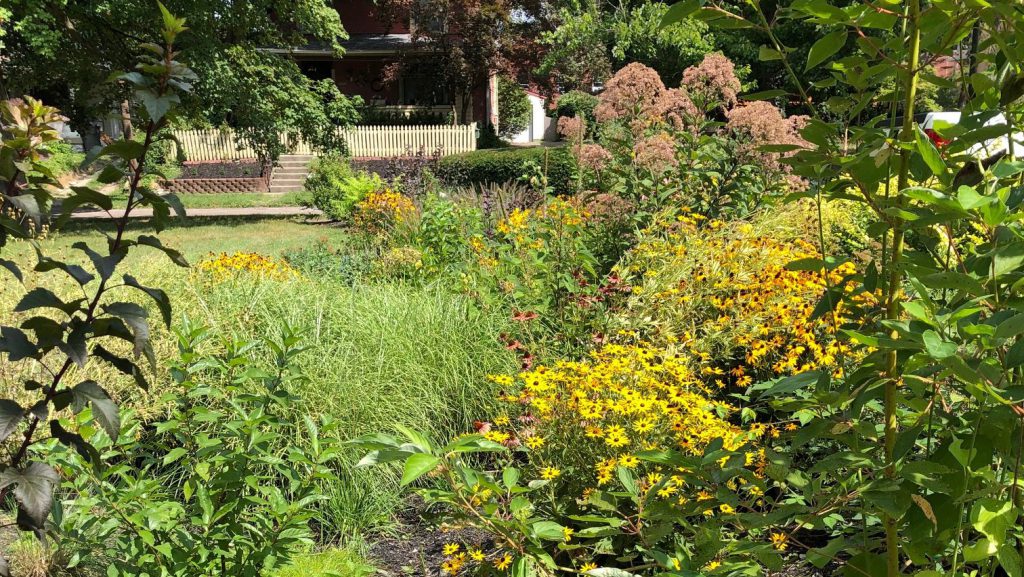
Native wildflowers are often known for their beneficial properties for pollinators and wildlife throughout the year. The idea of finding plants not always sold in big box stores may seem daunting, but these plants might be the ones for you! Plus you can help protect drinking water at the same time.
What does it mean to be a native plant? Native plants are species that have historically adapted to the local climate – the water, the temperature, and the soil. When planted in the right locations, they will provide beauty require less maintenance in both water and fertilizer for years to come.
Return to the roots
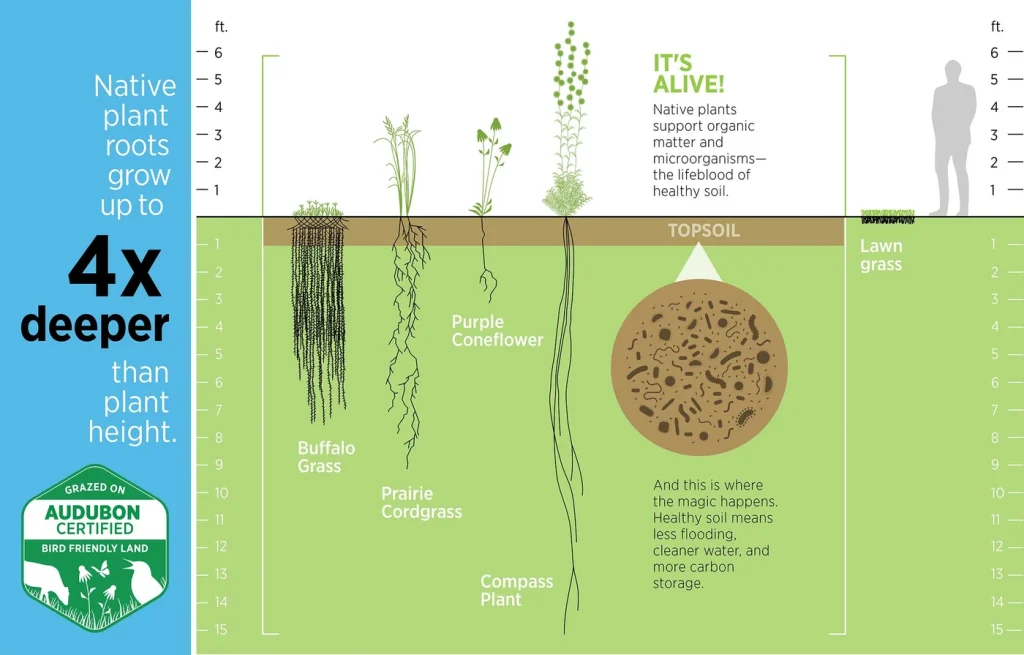
Native plant roots are different then other ornamentals and turf grass. Their roots go much deeper (up to 4x their plant height), which not only means they are more drought resistance, but they require less watering in general.
Deep roots are beneficial to helping stormwater infiltrate. As the roots grow, they create channels that allow more water infiltration while stabilizing topsoil and also filtering pollutants. When stormwater infiltrates rather than going into the municipality stormwater system, water is distributed naturally saving money and treatment costs.
Pay attention to the sunlight requirements and watch your plants blossom without the need for extra fertilizer! Reducing fertilizer also is beneficial to the treatment systems and local wildlife.
MCWEC board member Rachel Walker notes the benefits she’s seen from helping establish native plants in her office’s outdoor rain garden: “These native garden beds help support local wildlife including birds and insects, especially pollinator insects, which are important to support for ecosystem health. We’ve been able to keep our water use low after the plants were established.”
Knowledge sharing
While planting native species might seem intimidating, local plant sales provide a treasure trove of plants, as well as access to experts who can help you select the right plants for the right location on your property. These experts love to share their knowledge and help others make the transition to planting native.
In the Indianapolis area, Indy Urban Acres (check their Facebook page as well) and Native Plants Unlimited have annual spring sales with a large variety of different plants.
Give it a go! You might find your thumb turns a little greener next year and will probably have saved water and few pollinators in the process.